Rebrand & Rebuild
Optimising for rapid growth.Overview
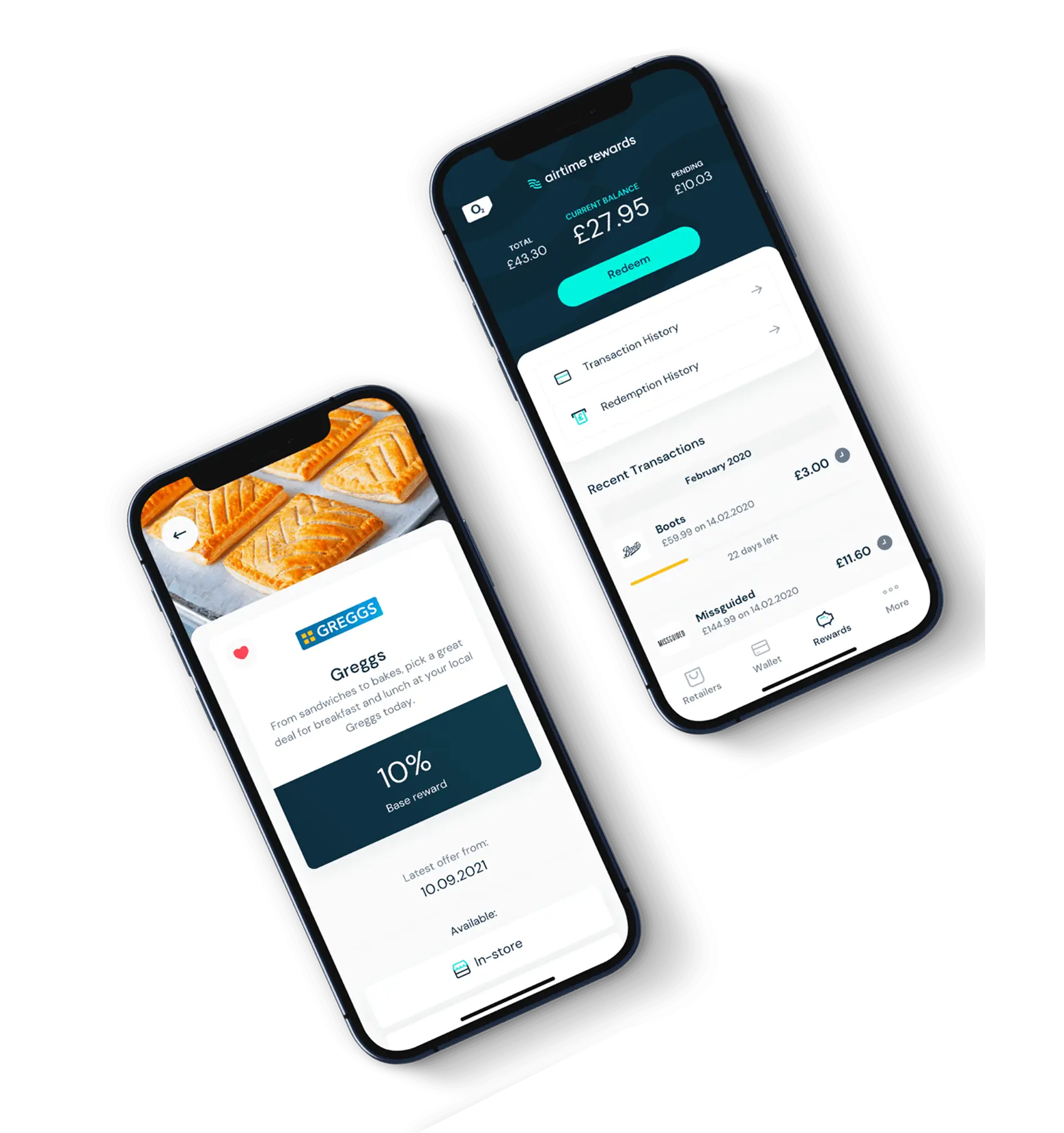
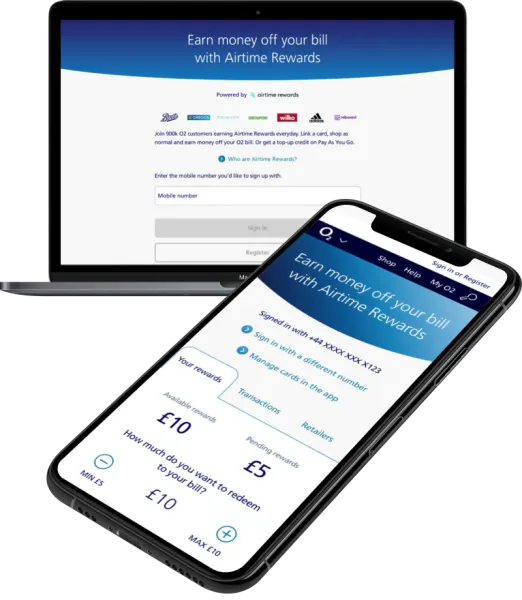
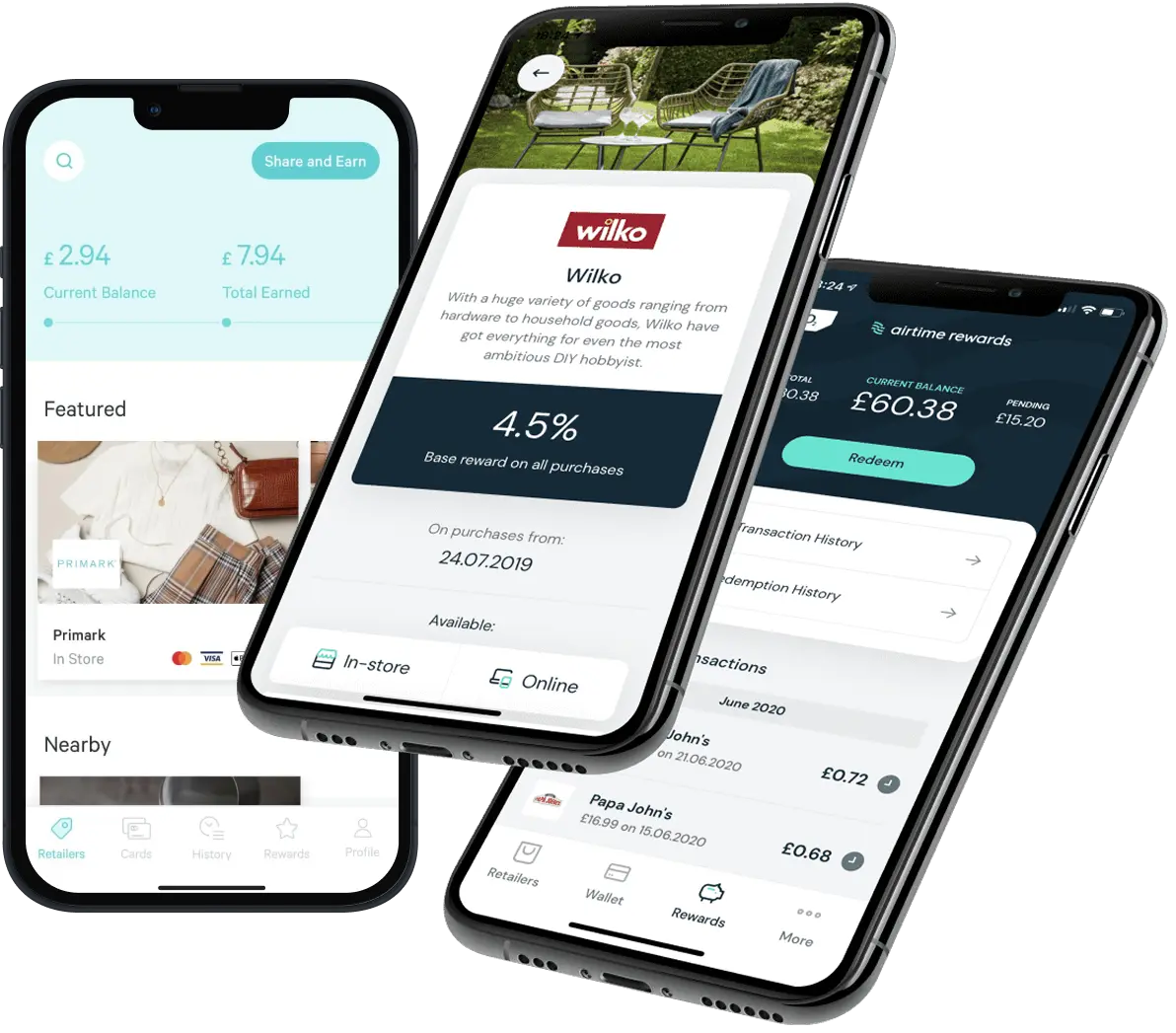
This project involved a complete rebuild of the Airtime Rewards mobile application and website, undertaken in conjunction with a full company rebranding. This strategic rebuild was instrumental in supporting the company's user growth from 250,000 to 1.3 million during my tenure. As a front-end team of 3, we successfully completed the entire rebuild in a remarkably short timeframe, earning an early completion bonus. Beyond my key role in development, I significantly contributed to the design, stepping in as the in-house designer after the external agency's departure, and providing timely design support and robust accessibility improvements.

Problem
The existing Airtime Rewards application was built on an outdated codebase, rendering it inflexible and unscalable, thereby preventing the integration of crucial new features necessary for user growth. Furthermore, it suffered from significant design deficiencies, including poor accessibility scores due to insufficient color contrast and a complete lack of support for screen readers. For a rapidly evolving startup aiming to move fast and innovate, these technical and design limitations posed a critical barrier to product development and user experience.

Objective
Our goal was to replace the legacy application with a modern, scalable, and fully accessible solution that perfectly aligned with the company's new brand identity. This new foundation was designed to support the seamless integration of critical growth-driving features like challenges and open banking, ultimately enabling rapid user expansion and business agility.

Approach
Strategic Assessment & Rebuild Decision
We evaluated two options: refactoring the existing codebase or undertaking a complete rebuild. We opted for a full rebuild to leverage new technologies, ensure optimal performance from the ground up, and significantly enhance the development team's capabilities.Detailed Planning & Base Setup
A comprehensive plan was established, beginning with an extensive review of the new designs to break down all necessary components, screens, assets, fonts, and color palettes. We adopted a waterfall approach, initiating with the basic app setup to consolidate all variables, fonts, styles, and the foundational structure.Component Development
Once the base structure was ready, we systematically created every 'dumb' component required for the application. We utilised JavaScript with PropTypes for robust type checking and implemented unit testing with React Native Testing Library. Development followed a peer review model, ensuring quality as each component was completed.Screen Construction & Backend Integration
After component completion, development shifted to building out the screens. Each developer took ownership of specific screens, integrating the pre-built components and connecting to the backend for dynamic, relevant content. Key functionalities such as authentication, account creation, airtime redemptions, and gifting were implemented. A rigorous peer review process was also maintained throughout this phase.Thorough Testing & Quality Assurance
Upon completion of screens and logic, the application underwent extensive testing to assess the user journeys. We implemented Cypress for automated end-to-end flow testing and conducted in-person testing by deploying the app onto our personal devices and using it regularly to identify and resolve any bugs, pain points, or usability issues.Phased Release Strategy
The new application was rolled out gradually, starting with internal staff, then expanding to a group of subscribed testers, before a gradually increasing wide release to the entire user base. This phased approach allowed us to gather feedback and ensure stability, achieving over 99% crash-free sessions even at the initial public launch.New Feature Development & Design Contribution
Post-launch of the core application, we immediately commenced work on integrating new, critical features such as 'Challenges', a feature introduced to gamify the app and increase engagement. In this phase, I significantly expanded my role as a designer, refining new concepts and incorporating them seamlessly into the new application's design flow, often acting as the sole designer.Continuous Improvement
The Airtime Rewards application continued to evolve, with ongoing refinements based on both quantitative and qualitative data, as well as the continuous integration of new, innovative features to enhance the user experience and drive growth.
Results
Accelerated User Growth
Successfully supported the company's expansion from 250,000 to 1.3 million users during my involvement.Rapid Product Delivery
Completed the entire application and website rebuild in a just under three months, ahead of schedule and earning an early completion bonus.Enhanced Scalability & Feature Readiness
Delivered a modern, scalable codebase capable of integrating critical growth features like challenges and open banking.Significant Accessibility Improvements
Achieved drastically improved accessibility scores through better color contrast and comprehensive screen reader support, enhancing inclusivity.Exceptional Stability at Launch
Maintained over 99% crash-free sessions even during the initial phased rollout to the broader user base.Learnings
Benefits of a Full Rebuild
Learned that for deeply entrenched legacy issues and ambitious growth goals, a full rebuild can be more efficient and effective than continuous refactoring, enabling the adoption of modern technologies and a stronger foundation.Accelerated Junior Development
Being 'thrown into the deep end' in a small startup environment was invaluable for rapidly developing from a junior to a trusted mid-level developer, gaining experience with complex projects early on.Seamless Brand & Product Alignment
Understood the critical importance of aligning product design and functionality tightly with a new brand identity for coherent user experience and market perception.Agile Design Ownership
Discovered the necessity and value of internal design ownership to rapidly adapt to changing scope, integrate new features, and ensure consistent design quality, especially when external resources are limited.Prioritising Accessibility from the Start
Reinforced the importance of baking accessibility into the core design and development process from the outset, rather than treating it as an afterthought.Value of Phased Rollouts
Confirmed that a phased release strategy is highly effective for risk mitigation, gathering real-world feedback, and ensuring product stability before widespread deployment.