Pack & Go
Picking and packing, reimagined.Overview
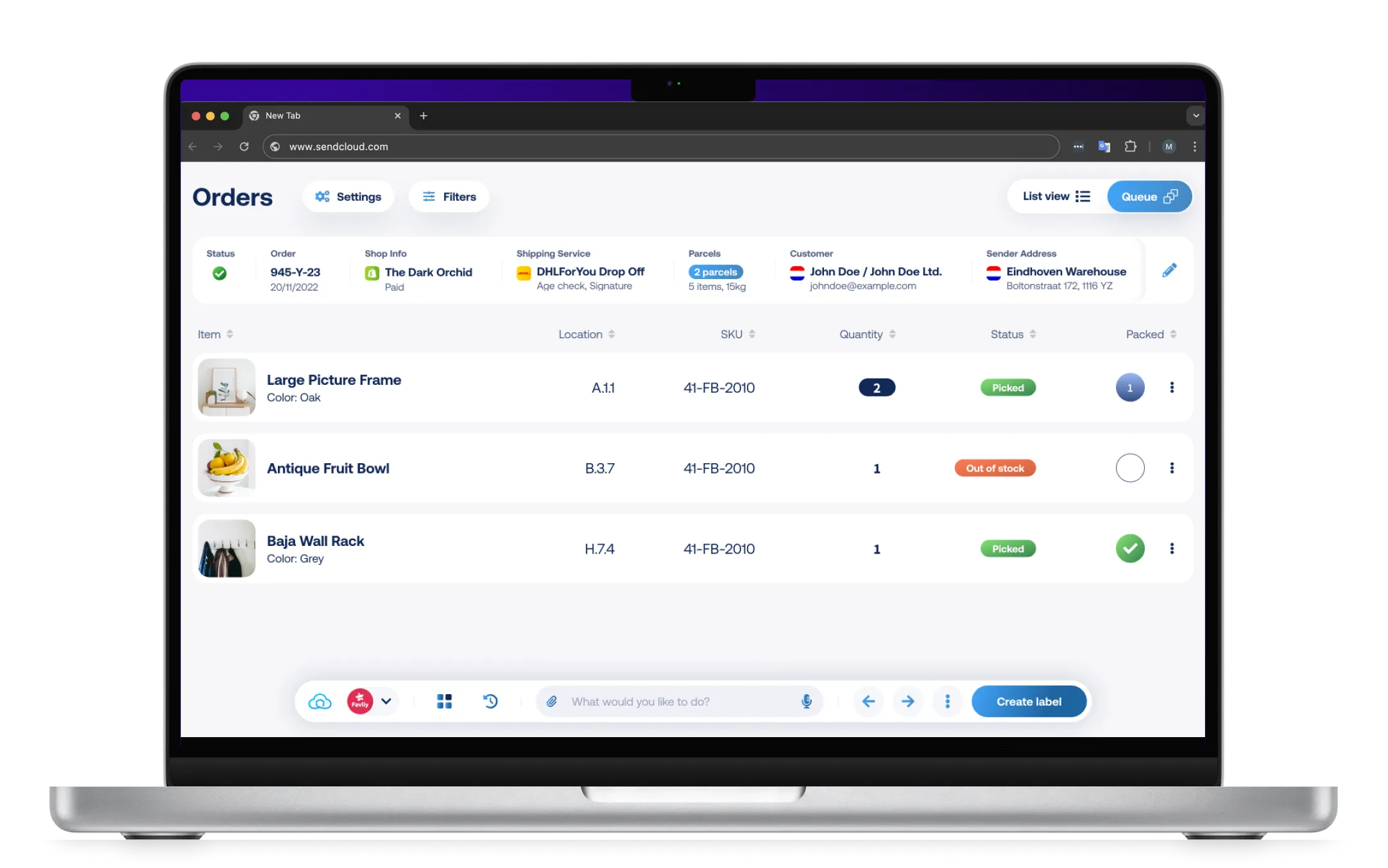
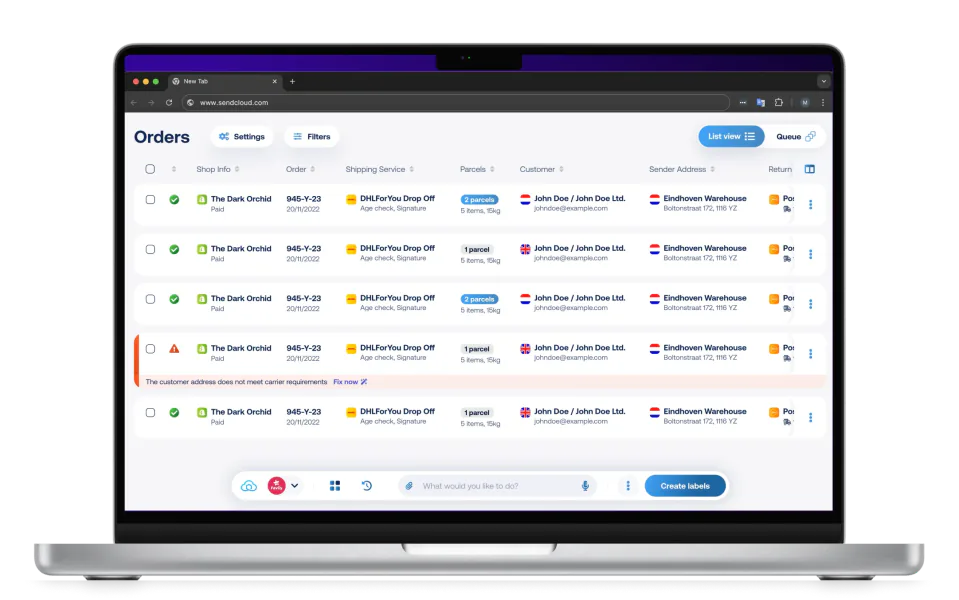
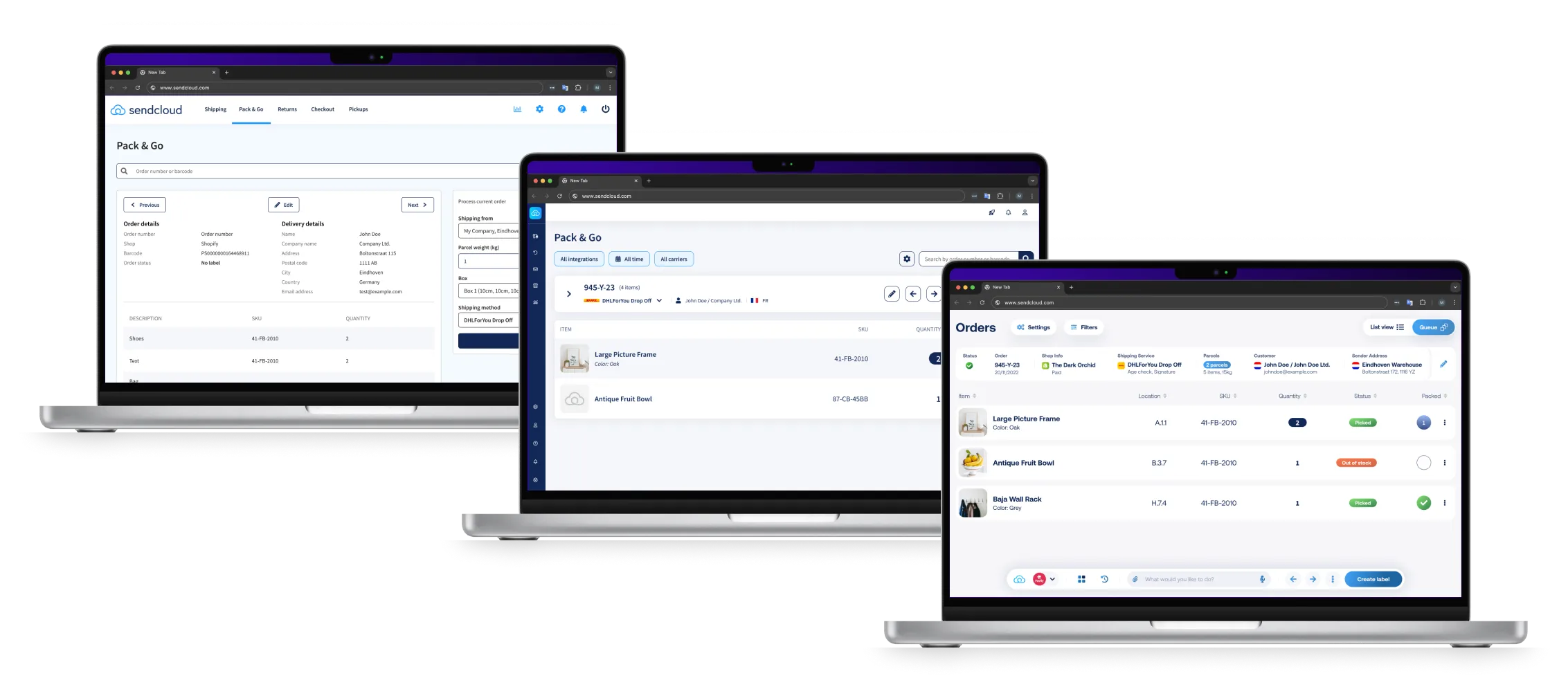
Upon joining Sendcloud, my initial project focused on revitalising Pack & Go, our solution to the picking and packing aspect of the shipping flow. The feature was originally conceived at a hackathon and released to users, but subsequently set aside. My task was to unlock its significant unrealised potential by delivering a brand new design that was scalable and capable of incorporating critical features identified during discovery.

Problem
Despite its considerable potential, Pack & Go remained largely underutilised for several reasons. Key feature gaps prevented optimisation of the warehouse shipping process, hindering its effectiveness. Furthermore, its limited onboarding outside of direct Sales involvement severely constrained organic growth. Crucially, the product was incorrectly positioned as a supplementary tool rather than its true role as a core, foundational element for users once adopted.

Objective
The primary objective was to unlock the inherent potential of Pack & Go by addressing critical feature gaps, improving its discoverability and onboarding, and correctly positioning it as a central component of the Sendcloud platform, thus increasing both adoption and net revenue growth.
Approach
Customer Immersion & Discovery
I spent the first 2 months travelling across the Netherlands, visiting customer warehouses to directly observe and participate in their picking and packing processes. This deep immersion allowed me to develop a profound understanding of their daily workflows, pain points, and latent needs.Initial Ideation
Leveraging customer insights, I developed five distinct design concepts for Pack & Go. Each concept was rigorously refined with the team and subjected to unmoderated user testing (approx. 25 each) to identify the most effective foundational elements and specific design choices.Refined Ideation & Testing
The insights from the unmoderated tests gave us a clear direction, with only some minor issues to resolve, and allowed us to combine the best elements into two more refined concepts. Each of these underwent remote, moderated testing.Unified Design & Iteration
Based on comprehensive testing, we synthesised the most successful elements into a single, cohesive design. Once again, we put this concept through moderated user testing, utilising my development experience to build a working prototype.Phased Rollout & Adaptation
To manage risk and gather continuous feedback, we implemented a phased rollout strategy. This allowed us to monitor user behaviour, collect valuable insights, and adapt the product iteratively as it was introduced to a wider audience.
Results
Significant Adoption Increase
Achieved a 40% increase in Pack & Go adoption once fully rolled out.Substantial Revenue Growth
A 2x increase in net revenue, attributed to the new designFeature Gap Resolution
Successfully designed and implemented critical features necessary for optimising warehouse processesImproved Product Positioning
Re-positioned Pack & Go from a side feature to a core platform component, recognised for its central role in user operationsScalable Design Foundation
Delivered a brand new design that is scalable to accommodate future additional features.Learnings
Value of Deep Immersion
The impact of truly immersing oneself in the customer's environment to uncover unspoken needs that other research methodologies might miss.Iterative Design & Testing
The effectiveness of developing multiple concepts, refining them through team collaboration, and validating them rigorously with users to arrive at the optimal solution.Strategic Product Positioning
The critical importance of correctly identifying and communicating a feature's true value and role within the broader product ecosystem.Benefits of a Phased Rollout
How a phased rollout allows for continuous feedback loops, agile adaptation, and confident scaling of a new product or feature.